

Right Now

The 6 Biggest Mistakes When Applying for a Green Card
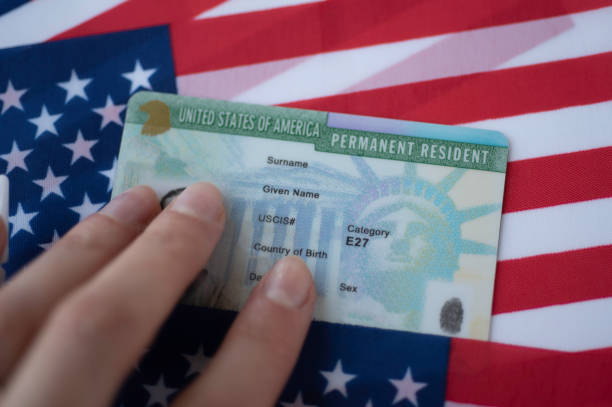
Obtaining permanent residency in the United States (a Green Card) is a dream for many, but it's also one of the most complex, lengthy, and rigorous legal processes in the world. U.S. Citizenship and Immigration Services (USCIS), the U.S. Department of State, and Customs and Border Protection operate according to detailed guidelines. The slightest oversight, a mistranslated word, or a missed deadline can lead to months of delay, rejection, or even a lifetime ban from entering the U.S. Based on the experience of immigration attorneys, we analyze the six most common mistakes applicants make on their path to their dream status and show how to avoid them.
1. False statements and concealing facts
This is the most serious mistake with the most severe consequences. Some applicants believe that concealing a criminal record, a revoked visa, a denied entry to another country, or illegal employment will pave their way through the process. U.S. immigration authorities have access to international databases, biometric systems, and archived files. If fraud is detected, it is considered fraud or deliberate deception. The consequences are not only denial of the Green Card application but also a lifetime ban from entering the U.S. Always provide all facts truthfully. For complex information in your biography, you should consult a licensed attorney.
2. Errors and oversights when participating in the Diversity Visa Program
The Diversity Visa Program is the easiest way to obtain a Green Card. Nevertheless, many winners fail due to minor errors during registration:
Unsuitable photos: using old photos (older than 6 months), edited/filtered photos, photos with too low a resolution, or retouched photos
Errors in the transliteration of last and first names: discrepancies with the data in the passport
Incomplete family information: If you do not list your spouse or relatives/adopted children under the age of 21 (even if they do not intend to travel with you), your application will be rejected during the interview
Repeated applications: Submitting two or more applications for the same person within a single season will automatically result in disqualification
3. Violation of residence status during your stay in the U.S.
If you are in the U.S. on a temporary visa (such as a B1/B2 tourist visa or an F-1 student visa) and wish to apply for a change of status (Application for Adjustment of Status – Form I-485), it is crucial to maintain your current status.
Illegal Employment: Working without an Employment Authorization Document (EAD) is a serious violation
Overstay: Remaining in the country beyond the period specified on Form I-94
90-Day Rule: Applying for a change of status immediately after entering the U.S. on a tourist visa may be considered a deliberate attempt to defraud the consular authorities during the visa application process.
4. Disregarding deadlines and time limits
The U.S. immigration process is entirely based on strict time limits:
Requests for Additional Documents (RFEs): When USCIS requests additional documents, you have only a limited time (usually 30–90 days) to respond. A delay of even one day will automatically result in the rejection of your application.
Updating Forms and Medical Certificates: Documents such as the Medical Examination Form (I-693) have expiration dates. Submitting outdated forms or certificates will cause delays.
5. Relying on questionable “intermediaries” and notaries
In many countries in Eastern Europe and Latin America, there is confusion between the terms “notary” and “lawyer.” In the U.S., a notary is not authorized to provide legal advice, complete immigration forms on your behalf, or represent your interests in court or before USCIS. Contacting supposed helpers, extortionists, or inexperienced advisors who promise a "100% guarantee of a Green Card" often leads to ruined cases, false information, and financial loss. It is recommended to either work independently or with a certified visa attorney.
6. Incorrect choice of immigration category
There are many pathways to obtaining a Green Card: family reunification, labor migration (EB-1, EB-2, EB-3, etc.), refugee/asylum status, and investor visa (EB-5). A common mistake is choosing a category without carefully considering the requirements.
For example, applicants in the EB-1A category (for individuals with exceptional abilities) often submit applications without sufficient evidence of international or national recognition, leading to swift rejection. Therefore, always carefully review the criteria for each category before applying.
More Posts


Map
Amelia Grant
Get DirectionsAmelia Grant
-
31-57 37th St
Long Island City, New York 11103
United States - 6462709836
Report This Post
Please complete the following requested information to flag this post and report abuse, or offensive content. Your report will be reviewed within 24 hours. We will take appropriate action as described in Findit terms of use.
