

Right Now


What more can one say about kitties? The second most popular type of pet in Australia, and an animal companion that has adapted perfectly to the Aussie way of living, cats, for many of us, are more than pets. They are veritable members of the family that are perfectly capable of forming genuine, long-term love connections with their owners.
Yes, they have a suspicious tendency to wreak havoc in your rooms whenever you leave them alone for five minutes, and they also scream bloody murder whenever you miss their feeding time by more than thirty seconds. But they are one of the best (and fluffiest) pals one can ask for. Cats are the preferred animal of choice for no less than 34% of Aussie households, and, in quite a contrast with other countries, no less than 41% of all pet cats in Australia either got adopted from animal shelters or were taken in as strays.
We love our kitties; most of us strongly believe they quite occasionally love us back, preferentially, probably after meals, and, realistically speaking, their ownership is more affordable than taking care of dogs. But just because they are perfectly adaptable to apartment living, this doesn’t mean that you should forget investing in accessories such as kitty litter or climbing towers.
Why Invest in Quality Litter?
Honestly, it all boils down to natural instincts. Unlike dogs, who you realistically have to walk at least two times per day, kitties have an ingrained tendency to bury their waste. In fact, even untrained kittens start exhibiting this behaviour at around four weeks of age, as long as they have access to high-quality cat litter crystals or conventional clay-based litter options. Why do kitties bury their waste? Well, just look at them.
While they have one of the highest hunting success rates in the animal kingdom, and they are the bane of most small mammals peacefully coexisting in your backyard, cats are not exactly the largest predators around. So, in their natural environment, they bury their waste in order to hide their scent from prey, larger predators, and also to avoid the attention of other dominant cats.
It’s in their instinct, and it’s one of the many reasons why kitties make such great pets for individuals living in space-restrictive apartments. Cats are clean animals who can get stressed out if they don’t benefit from a litter box where they can bury their waste. In fact, if a cat refuses to use her litter box even though it’s perfectly suitable for her size, or she did it previously, then that’s a sign that something is wrong, and you should probably contact your local vet.
Why Should You Buy Kitty Litter?
Realistically speaking, any type of litter-like material will work for your kitty. Do you only have access to some leftover sand? Not ideal, but better than nothing. However, purpose-made kitty litter has some genuine benefits over alternatives such as wood pellets, recycled cardboard, or soil.
1) Kitty Litter Is Better at Absorbing Smells
I don’t know about you, but although I love my kitty, it’s enough to spend around two minutes next to her litter in order to reconsider my life choices. Kitties, although they are exceptionally clean animals, are still obligate carnivores. And where there is meat involved, there are droppings whose smell can be classified as a war crime under the Geneva Convention.
Purpose-built kitty litter can trap odour, rather than simply mask it, and clumping litter in particular is exceptionally effective in keeping smells at bay, faster than they can spread in your house. Sure, it will still smell. But besides encouraging proper litter box habits, purpose-made litter is effective at keeping odour to a minimum, and at least for me, that’s enough of a reason to purchase it in bulk.
2) It Reduces Stress
Cats are not like other pet companions. If the litter in your kitty’s dropping box is not exactly up to standards, she might stop using it completely. That’s bad news for your furnishing accessories, but it can also be dangerous, as some cats might avoid doing their natural business entirely, and thus develop urinary tract blockages that, for some kitties, can become life-threatening.
3) It’s Easier to Clean
Maybe it’s cheaper and easier to get some soil from your backyard and call it a day. But do you really want to scoop up your cat’s droppings and risk making a mess of it all? Whether we are talking about cat litter crystals or clay of the clumping variety, kitty litter can make cleaning the litter box an easier process, and this, at least to me, is worth every penny.
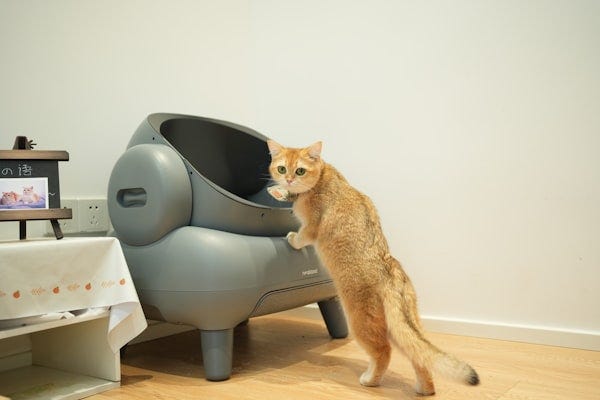
Clay Litter vs. Cat Litter Crystals: What to Choose and Why?
In the end, it’s all about personal preferences.
Crystal Cat Litter Is:
Excellent at urine absorption
Can keep odours at bay
It can last for a while before needing to be replaced
It produces no dust
However, as a Downside:
It’s sometimes more expensive than Bentonite litter
It doesn’t clump
Some cats don’t like it, as the texture is a bit weird
Bentonite-based litter, on the other hand, is the preferred choice of most cat owners in our country.
This Type of Litter:
Is available in pretty much any local pet shop
Has excellent clumping properties
It’s preferred by most kitties, due to its texture that resembles loose soil
It’s cheap
That Said, for Some Owners, It Also Has Disadvantages:
Clumping clay can produce dust
It’s heavier than cat litter crystals
It can sometimes get stuck to your kitty’s fur
Needs more frequent scooping than other types of litter.
Which should you go for? That entirely depends on your kitty’s preferences. Personally, I was always a fan of conventional clay litter, as I appreciate the clumping properties of Bentonite. My girlfriend, however, prefers silica gel litter, as it’s a bit better when it comes to odour control, and it produces no dust.
For her, that’s quite important, as for some reason, she chose to redecorate half her apartment with white tiles, and now every strand of dust is visible from half a mile away. The good news? You live in a country in which you are spoiled for choice, and any type of litter you decide to go for, you know you will likely make the right decision.
More Posts


Report This Post
Please complete the following requested information to flag this post and report abuse, or offensive content. Your report will be reviewed within 24 hours. We will take appropriate action as described in Findit terms of use.
