


Right Now

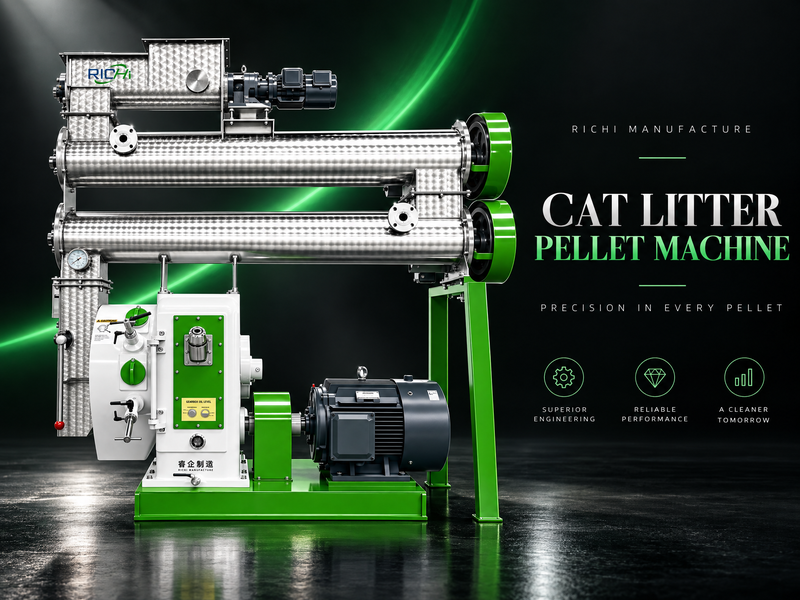
Protecting Bentonite Cat Litter After Production
Manufacturing does not end when the product leaves the main processing equipment. Finished cat litter must be screened, packaged, stored, and transported under conditions that preserve its intended quality. A bentonite cat litter pellet machine is only one part of the manufacturing system; downstream handling also influences the condition of the product customers receive.
Packaging and storage decisions should be made early in project planning. The factory needs to understand the target market, package sizes, distribution method, storage duration, and expected handling conditions. These factors affect the packaging equipment, warehouse layout, and procedures required to protect finished goods.
Choose Packaging for the Intended Market
Different customers may require different package formats. Retailers may prefer smaller bags that are convenient to handle, while distributors or bulk buyers may order larger quantities. The manufacturer should identify these requirements before choosing filling and sealing equipment.
The packaging material should be appropriate for the product and distribution environment. The business should evaluate resistance to normal handling, closure performance, labeling needs, and the ability to maintain package integrity during storage and transportation.
Packaging cost should be balanced against product protection. An inexpensive bag may increase the risk of damage if it cannot withstand the intended handling conditions. Conversely, unnecessary packaging complexity may increase cost without providing a meaningful benefit.
Coordinate Packaging With Production Output
The packaging stage should be able to handle the output from upstream equipment. If the filling or sealing process is too slow, finished product may accumulate and eventually restrict the main production line.
A kitty litter production line should therefore be planned with packaging capacity included in the overall throughput calculation. Buyers should confirm the expected filling rate, the package sizes supported, and the labor or automation required for normal operation.
The factory should also allow time for packaging material changes, cleaning, inspection, and routine maintenance. A schedule that assumes continuous packaging without these activities may overestimate the amount of product that can be dispatched.
Protect Finished Goods During Storage
Storage conditions should reflect the product and the packaging design. Finished bags should be protected from contamination, package damage, and environmental conditions that could affect product quality. The warehouse should provide sufficient space for safe movement and stock rotation.
Inventory procedures should identify each production batch and distinguish between goods awaiting inspection and approved finished product. This reduces the risk of shipping unapproved material and helps the business respond if a customer reports a quality issue.
The warehouse layout should also make it practical to retrieve older stock according to the company's inventory policy. Poorly organized storage can create unnecessary movement, damage packages, and make it difficult to confirm which products are ready for dispatch.
Inspect Packages and Pallet Loads
Packaging inspection should cover the characteristics that matter to the product and customer. Depending on the format, checks may include fill weight, seal integrity, label accuracy, visible damage, and the stability of pallet loads.
Sampling should be consistent. Employees should know how frequently packages are inspected, how results are recorded, and what action is required when a problem is found. If defective packages are identified, they should be separated from accepted goods until the issue is resolved.
Palletizing and loading also affect product condition. Unstable stacks or unsuitable handling can damage bags before they reach the customer. The business should establish loading procedures that match the package format and transport method.
Trace Products Through the Distribution Process
Batch identification should remain legible after packaging. The information should allow the company to connect finished goods with the raw materials and production records used to manufacture them.
If a complaint arises, the company can use these records to determine which batches may be affected and review the relevant inspection results. Traceability also supports more accurate inventory management because the status and origin of stored products remain clear.
The factory should review how product identification is applied and whether it remains readable during normal storage and transportation. The procedure should be simple enough for employees to follow consistently.
Review Equipment and Packaging Information
Manufacturers can consult a relevant web link to review additional equipment information, then request confirmation of package formats, filling rates, and integration requirements. These details should be checked against the actual product and distribution plan rather than assumed from a general machinery description.
A pellet production line should be evaluated through the full path from processing to finished-goods storage. Good upstream output provides limited commercial value if packaging and warehouse operations cannot preserve product quality or fulfill orders reliably.
Conclusion
Packaging and storage protect the product after manufacturing and help maintain customer confidence. Suitable packaging, balanced filling capacity, organized inventory, and consistent inspections reduce avoidable damage and dispatch errors. Integrating these requirements into the original factory plan supports a more reliable route from production to customer delivery.
More Posts


Report This Post
Please complete the following requested information to flag this post and report abuse, or offensive content. Your report will be reviewed within 24 hours. We will take appropriate action as described in Findit terms of use.
