


Right Now

Designing a Complete Cow Dung Pellet Production Line
Why the Entire Process Must Be Considered
A cow manure pellet production facility consists of interconnected operations rather than one isolated machine. The condition of the incoming material affects preparation, preparation affects granulation, and the output of the pellet press determines the workload placed on cooling, screening, and packaging equipment.
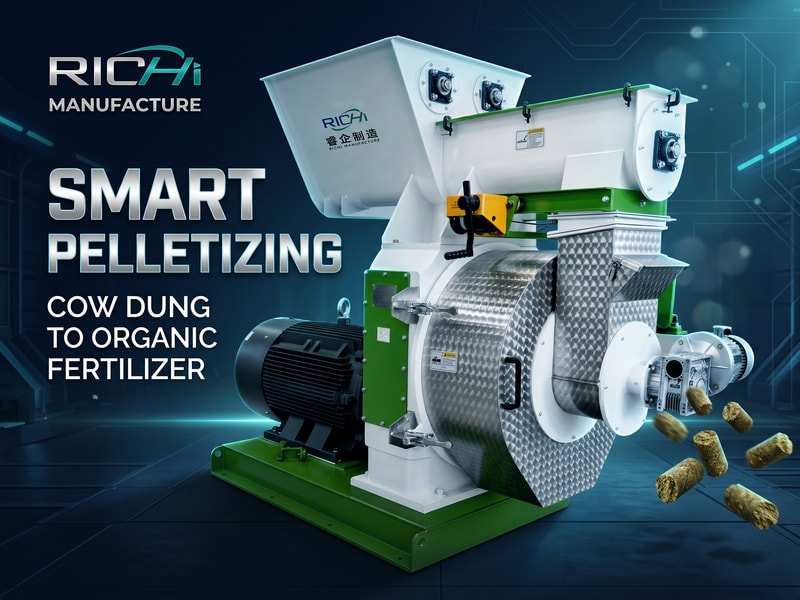
A cow dung pellet machine performs the central compression operation, but the finished product depends on how effectively the entire line is coordinated. A high-capacity granulator may remain underused if the dryer supplies insufficient prepared material. Similarly, an undersized cooling section can restrict production even when granulation is operating properly.
The most effective design begins by defining the raw-material characteristics, required output, intended product, and site limitations. These requirements provide a foundation for selecting and arranging the equipment.
Define the Raw-Material and Product Specifications
Assess the Incoming Manure
Fresh cattle manure may contain considerable moisture and fibrous material. Depending on the collection method and intended use, it may require dewatering, controlled fermentation, crushing, and drying before granulation.
Material supplied by several farms may vary in composition and condition. The project team should determine whether blending, additional inspection, or more flexible preparation equipment is necessary to manage these differences.
Establish the Finished Pellet Requirements
The final product specification should identify the intended pellet diameter, moisture level, durability, and other relevant quality characteristics. If the pellets will be marketed as organic fertilizer, nutrient composition and maturity may also need to meet applicable standards.
The packaging method should be defined at this stage. A plant selling bulk product may need different equipment from one supplying bagged fertilizer through distributors. These decisions influence the finishing system and the space required for storage.
Arrange the Preparation Section
Dewatering and Fermentation
Where necessary, dewatering reduces the amount of water that must be handled in later stages. Fermentation can help stabilize organic material when managed under appropriate conditions. The design should account for storage time, moisture, aeration, temperature, and environmental management.
These operations can require substantial space, especially when the raw material arrives continuously but is processed in batches. The layout should allow sufficient working area and clear routes for material transfer.
Crushing and Drying
Crushing reduces particle size and helps improve material consistency. Drying may then bring the feedstock into a suitable condition for pellet formation. The required equipment depends on the incoming moisture, the intended throughput, and the characteristics of the mixture.
Dryer capacity should be based on the quantity of water that needs to be removed rather than simply the mass of incoming manure. A mismatch at this stage can restrict the entire production line.
Coordinate the Granulation and Finishing Sections
An organic fertilizer pellet production line should deliver prepared material to the granulator at a stable rate. The feeder, compression chamber, die, rollers, and cutter work together to form pellets from the prepared mixture.
After granulation, cooling helps bring the product toward a suitable storage condition. Screening separates material outside the desired size range, while packaging prepares the product for transport and distribution.
The capacity of these stages should be matched to the granulator's expected output. The design should also consider the potential for pellet breakage during transfer, dust generation, and the handling of rejected material.
Balance the Capacity of Every Machine
Find the Potential Bottlenecks
The nominal output of the pellet press is only one factor in overall plant performance. Upstream preparation, conveyors, intermediate storage, cooling, screening, and packaging can each restrict production.
An engineering review should estimate the expected throughput of every major stage under the same operating assumptions. It should also account for cleaning, routine maintenance, and unplanned downtime.
Intermediate storage can help separate stages that operate at different rates, but excessive storage increases floor-space requirements and material handling. The layout should provide enough flexibility without introducing unnecessary complexity.
Consider Material Transfer and Site Access
Conveyors should be arranged to minimize unnecessary movement and reduce the risk of product damage. Maintenance access is equally important. Operators need space to inspect motors, drives, feeders, dies, and rollers without unsafe workarounds.
Before finalizing the layout, confirm building dimensions, foundation requirements, power supply, ventilation, and vehicle access. The site plan should also separate raw-material reception from finished-product handling.
Build Quality Checks into the Process
A production line should include a practical method for inspecting feedstock and testing finished pellets. Depending on the intended market, relevant checks may include moisture, size distribution, durability, nutrient composition, and maturity.
Quality records should be linked to production conditions so that changes can be investigated. If the finished pellets become more fragile, for example, the cause may involve raw-material preparation, die condition, or cooling rather than one isolated machine setting.
For technical research, click here for more info can serve as a reminder to request a complete process diagram and detailed equipment schedule from prospective suppliers. These documents should show how the proposed machines connect and identify the scope of supply.
Select the Central Machine Carefully
The pellet mill should match the prepared feedstock, required output, and finished product specification. Buyers should review model capacity, motor power, die dimensions, maintenance requirements, and the operating conditions used for performance estimates.
RICHI's published information covers manure pellet presses and related organic fertilizer processing equipment. A suitable project proposal should explain how the selected granulator integrates with preparation, cooling, screening, and packaging machinery.
Design for Reliable Long-Term Operation
A complete production line should be planned as a coordinated process. Balanced capacity, suitable material preparation, clear operating procedures, and practical maintenance access all contribute to dependable production.
By establishing the raw-material profile and product specification before selecting equipment, businesses can reduce the risk of bottlenecks and unnecessary investment. A well-designed line provides a stronger basis for consistent pellet quality and efficient manure utilization.
More Posts


Report This Post
Please complete the following requested information to flag this post and report abuse, or offensive content. Your report will be reviewed within 24 hours. We will take appropriate action as described in Findit terms of use.
