


Right Now

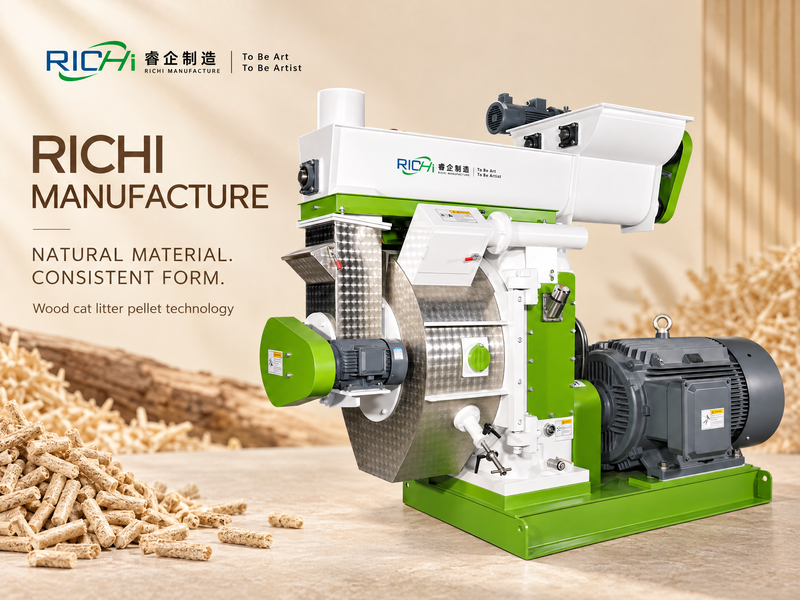
Developing a Consistent Formula for Pine Cat Litter Pellets
Why Formulation Determines Product Quality
Two factories can use similar equipment and produce cat litter with noticeably different characteristics. One product may retain its shape during handling, while another generates excessive fines or breaks apart during transportation. Differences in raw material composition, moisture, particle size, and processing conditions can all contribute to these outcomes.
Pine-based cat litter manufacturers should therefore develop a formula and production process together. A pine cat litter pellet machine can compress prepared material into pellets, but its performance depends on how consistently the material enters the pelleting chamber. The machine cannot compensate indefinitely for unsuitable feedstock or poorly controlled preparation.
A practical formulation program begins with a clear description of the desired product. The producer should define pellet dimensions, acceptable dust levels, moisture targets, packaging requirements, and the performance characteristics expected by customers.
Understanding Pine Fibers and Wood Particles
Particle Preparation Comes First
Pine sawdust contains particles of different sizes and shapes depending on the source and processing method. Fine material may flow differently from longer wood fibers, while coarse particles can interfere with consistent pellet formation. Crushing and screening help create a more controlled feedstock.
However, reducing all material to the finest possible powder is not automatically the best approach. Fine grinding consumes energy and may increase dust generation. The appropriate particle distribution should be determined through trials that evaluate both pellet quality and production efficiency.
The producer should record the source of each raw material sample and the preparation conditions used. Such records make it easier to identify why a particular batch produces stronger pellets or runs more smoothly through the equipment.
Moisture and Binding Behavior
Moisture influences material flow and the way particles interact during compression. Excess moisture can complicate handling and drying, while insufficient moisture may make some formulations more difficult to form. The correct operating range depends on the feedstock, equipment, and any additional ingredients.
Some manufacturers investigate compatible plant-derived binders or other formulation components to improve cohesion. These additions should be evaluated carefully because they can influence absorbency, odor characteristics, production cost, and the behavior of the finished litter. A formula should not be judged solely by whether it forms a pellet.
Designing a Repeatable Production Trial
A useful trial changes a limited number of variables at a time. The factory might compare different particle-size distributions while holding the other processing conditions relatively stable. Another trial could investigate moisture adjustments after a suitable particle distribution has been established.
Measurements should cover more than the appearance of the pellets immediately after production. Samples should also be evaluated after cooling, storage, and handling. A pellet that looks satisfactory at the machine outlet may behave differently after packaging or transportation.
A tofu cat litter production line may also process plant-based formulations, but its process configuration should not automatically be copied for pine material. Soybean residues, starch-based ingredients, and wood fibers have different characteristics. Shared equipment categories do not mean that formulations or operating settings are interchangeable.
Coordinate Pelletizing With Downstream Processing
Cooling and Screening
Fresh pellets can retain heat and moisture. Cooling allows them to reach a more suitable condition for subsequent handling, while screening removes oversized pieces and excess fines. The cooling and screening stages should be matched to the actual output of the pellet mill.
Recovered material may sometimes be reprocessed if it remains clean and suitable for the formulation. A planned return-material route can reduce waste, but repeated processing should be monitored because it may affect particle characteristics and product consistency.
Packaging and Storage
Packaging requirements influence the final quality control program. Pellets should be evaluated for breakage and dust after representative handling, not only at the production line. Bags must protect the product during storage and transport, while warehouse conditions should be considered when setting moisture and packaging specifications.
A factory should also ensure that different batches remain traceable. This is particularly useful when customers report a change in pellet appearance, handling performance, or other product characteristics.
Turning Trial Results Into a Commercial Process
Once the formulation is established, the plant should document raw material acceptance criteria, preparation settings, mixing procedures, pelletizing conditions, and finished-product checks. Operators can then compare routine production with the results achieved during successful trials.
For a new manufacturer, the equipment selection process should involve both the desired product and the available raw material. Technical discussions can help determine whether existing crushing and drying equipment can be reused or whether additional processing stages are needed.
Those researching machinery can Visit This Link to examine the relevant equipment information and compare available process configurations. The most useful follow-up is to prepare a sample description, target output, and preliminary product specification before requesting a detailed proposal.
A properly configured pellet production line should support stable feeding, consistent pellet formation, effective cooling, and reliable screening. These stages work together; optimizing only the pellet mill may leave other quality problems unresolved.
Conclusion
A successful pine cat litter formula is developed through controlled testing rather than guesswork. By evaluating raw material characteristics, adjusting preparation conditions, monitoring pellet quality, and documenting repeatable procedures, manufacturers can build a process that delivers more consistent products and supports long-term commercial production.
More Posts


Report This Post
Please complete the following requested information to flag this post and report abuse, or offensive content. Your report will be reviewed within 24 hours. We will take appropriate action as described in Findit terms of use.
