


Right Now

Making Kitty Litter Production More Efficient
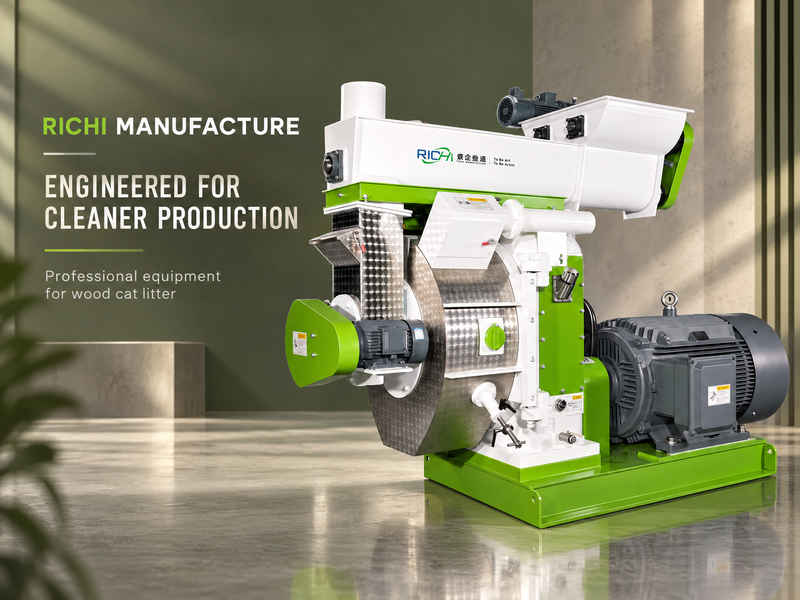
Production efficiency is not determined by the speed of a single machine. It depends on how consistently raw materials move through preparation, pelletizing, cooling, screening, and packaging. A kitty litter pellet machine may be capable of producing pellets at a suitable rate, yet the plant can still lose output because of unstable feeding, frequent stoppages, excessive rework, or insufficient packaging capacity.
Manufacturers looking to improve efficiency should first understand where time and material are being lost. Practical improvements often begin with better process coordination and clearer operating procedures rather than immediately purchasing additional equipment.
Map the Production Workflow
The first step is to document how material moves through the facility. The workflow should include receiving, inspection, storage, preparation, mixing, granulation, cooling, screening, packaging, and dispatch. At each stage, the team should identify waiting time, repeated handling, material accumulation, and common interruptions.
This review can reveal bottlenecks that are not immediately obvious. For example, a dryer may process material more slowly than the pelletizer, forcing the main machine to wait. Alternatively, the line may produce pellets efficiently but lose time because finished-product bags are not prepared quickly enough.
Observations should be collected during normal operating conditions rather than relying only on estimates. A simple record of stoppage times, output, and the reasons for interruptions can help the team identify the most important improvement opportunities.
Coordinate Equipment Capacity
Every stage needs to support the intended production rate. A larger pelletizer will not necessarily increase finished-product output if the preparation equipment, cooler, or packaging system remains unchanged.
An automatic cat litter production line may help coordinate material transfer and reduce some repetitive manual tasks. However, the equipment still needs to be matched to the feedstock and required product specifications. Automation is most useful when it addresses a defined problem, such as inconsistent feeding or unnecessary material handling.
Manufacturers should ask suppliers to explain the expected throughput of each major stage. They should also clarify the conditions behind the figures, including raw-material properties, moisture, pellet dimensions, and the assumed operating schedule.
Reduce Material Waste
Waste can occur when raw materials are contaminated, preparation settings are unsuitable, pellets break during handling, or screening removes a large quantity of fines. The plant should measure material yield at relevant stages to understand how much incoming material becomes acceptable finished product.
When waste increases, operators should investigate the cause instead of immediately changing multiple machine settings. A sudden rise in fines might result from a raw-material change, a worn component, unstable feeding, or rough transfer between equipment. Identifying the source makes it possible to apply a more targeted correction.
Returned material should be reprocessed only under a documented procedure. Uncontrolled recycling of fines can change the composition of the feedstock and create inconsistent pellet quality. Any reprocessing method should be evaluated against the product specification.
Improve Maintenance Planning
Unexpected equipment failures interrupt production and may affect several connected machines. Preventive maintenance can reduce avoidable downtime by identifying wear, blockages, lubrication needs, and other developing issues before they cause a breakdown.
Maintenance tasks should be scheduled around equipment manuals and actual operating conditions. Operators can perform authorized routine checks, while more complex work should be assigned to qualified personnel. The plant should also maintain records of repairs and replacement parts to identify recurring problems.
The cost of maintenance should be compared with the cost of unplanned downtime. Delaying a small repair may appear economical, but a failure during a busy production period can disrupt orders and increase the overall expense.
Use Production Data to Guide Decisions
Useful efficiency indicators include output per operating hour, usable material yield, downtime, rejected-product rate, energy consumption, and labor hours per ton. These indicators should be calculated consistently so that performance can be compared between shifts and production batches.
The goal is not to collect data for its own sake. Records should help answer specific questions: Which stage limits output? Which raw material produces the most waste? Does a maintenance change reduce interruptions? Is packaging keeping pace with pellet production?
Relevant equipment documentation can be reviewed through a Related Site reference before the team compares process options. Any proposed change should then be assessed using the plant's own operating data and product requirements.
Standardize Daily Operating Procedures
Consistent procedures help different operators achieve similar results. Instructions should cover material inspection, startup, feeding, routine monitoring, shutdown, cleaning, and reporting of abnormal conditions. They should also define the settings employees may adjust and the situations that require technical support.
Training is particularly important when new equipment or a new formulation is introduced. Employees should understand how raw-material changes affect the process and why operating limits must be followed.
A pellet production line should be treated as one connected system, with shared production targets and clear responsibilities at every stage. Improving an individual machine is valuable only when the change supports overall plant performance.
Conclusion
Improving kitty litter manufacturing efficiency begins with measuring the existing process, identifying bottlenecks, and addressing the causes of waste and downtime. Coordinated equipment, preventive maintenance, consistent procedures, and useful production records help create a more predictable operation. These improvements can increase usable output without automatically requiring a major equipment investment.
More Posts


Report This Post
Please complete the following requested information to flag this post and report abuse, or offensive content. Your report will be reviewed within 24 hours. We will take appropriate action as described in Findit terms of use.
